
How to Sell Used IT Equipment: A 10-Step Process
Knowing how to sell used IT equipment professionally requires a 10-step process that runs from inventory through settlement, with audit-trail documentation accumulating at every step. Done well, the process improves residual-value recovery, preserves compliance proof, and creates a clean handoff for both the IT team and the vendor. Done ad hoc, the same equipment commonly produces materially less recovery, partial audit gaps, and stakeholder friction at close-out. This guide walks each step, identifies the verification point at every transition, and shows what an audit-grade ITAD vendor delivers versus what an unequipped vendor or peer-to-peer marketplace cannot.
The 10-Step Process for Selling Used IT Equipment
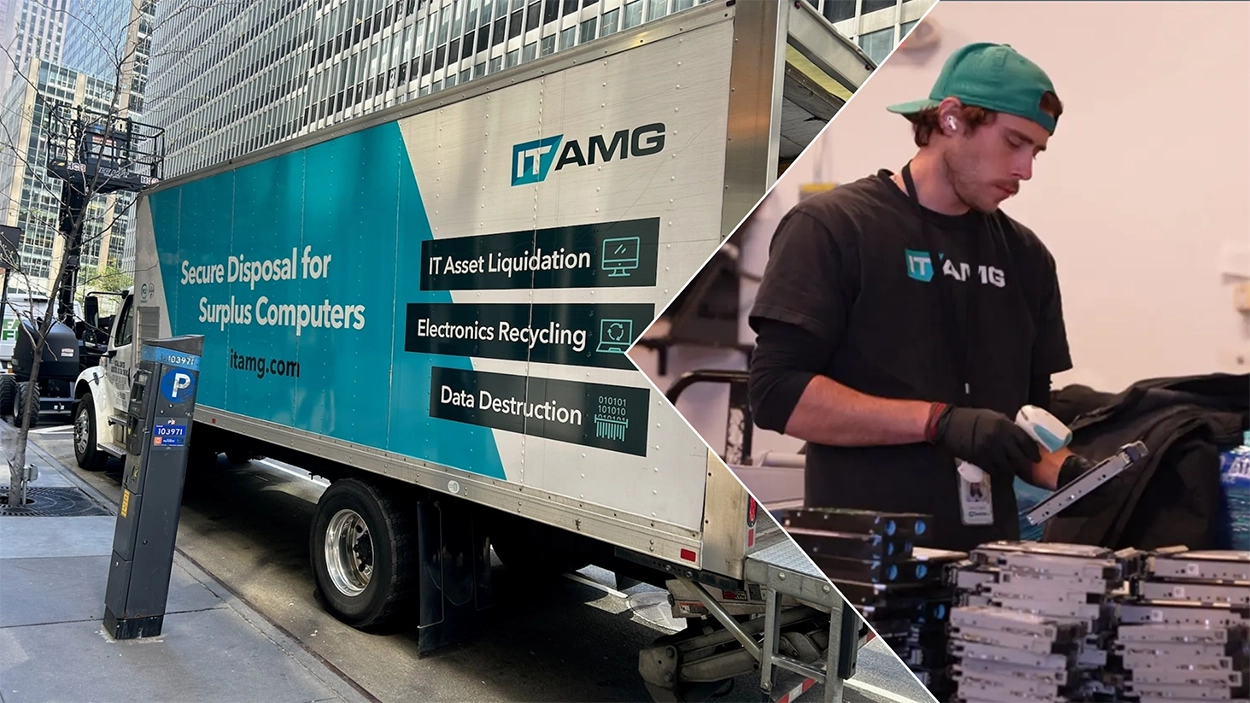
Selling used IT equipment professionally is a 10-step process from inventory through compliance reporting, with audit-trail documentation accumulating at every step. Each step carries a verification point. The audit-trail accumulates through the entire sequence rather than being assembled retroactively at close-out, which is what separates audit-grade disposition from ad hoc resale.
The process applies across every common enterprise trigger: refresh cycle, decommissioning, lease-end, M&A consolidation, office closure, and post-reduction hardware recovery. The same 10 steps also apply across every asset class typical to enterprise disposition: laptops, desktops, servers, networking gear, storage arrays, and the old company computers that accumulate during refresh cycles. Trigger context and asset mix change which steps need extra attention. The sequence itself stays constant.
| Step | What happens | What gets verified | Deliverable |
|---|---|---|---|
| 1 | Inventory and asset documentation | Asset count, configurations, condition grades | Asset list with serial numbers |
| 2 | Pre-quote request | Quote accuracy reflects documented reality | Vendor pre-quote |
| 3 | Vendor selection and contract | Certification stack, contract terms | Signed disposition agreement |
| 4 | Pre-pickup data-sanitization decision | Risk allocation: seller-side or vendor-side wipe | Sanitization plan |
| 5 | Scheduled on-site collection and chain-of-custody handoff | Signed transfer, sealed transport | Chain-of-custody paperwork |
| 6 | Receipt and condition verification | Variance audit against pre-quote (title transfers at collection) | Receipt report |
| 7 | Certified data destruction | Per-item serialized record (NIST SP 800-88) | Serialized asset report + project Certificate of Recycling + Blancco erasure reports |
| 8 | Disposition routing | Highest-and-best-use routing per asset | Disposition record |
| 9 | Settlement | Reconciliation against contracted structure (flat rate or revenue share fallback) | Recovery report |
| 10 | Compliance reporting | Per-asset audit packet | Audit-trail close-out |
The remaining sections walk each step, identify the verification point, and surface the failure modes that commonly cost the seller value or create audit gaps. The full sequence maps to the ITAMG sell used IT equipment service when ITAMG is the disposition vendor.
Step 1: Inventory and Asset Documentation
Complete asset documentation before requesting a quote is the highest-leverage seller-side investment in the disposition process. The mechanism is straightforward: vendors quote against what they can verify. A vague inventory produces a vague quote, with all the risk priced in. A documented inventory produces a quote that reflects documented reality, with risk priced out.
The minimum documentation set: serial numbers, model numbers, configurations (processor, memory, storage, accessory inventory), per-asset condition assessments, and quantities by configuration. Asset-tag records from the IT asset management system feed directly into this step. Where original purchase documentation exists, including it strengthens valuation for higher-value enterprise equipment, especially for Dell PowerEdge, HPE ProLiant, and Cisco networking gear.
In ITAMG's experience, inventories assembled before the pre-quote close materially faster than inventories assembled during back-and-forth after a vague initial number. Upfront documentation is also what makes Step 6 (receipt verification at the vendor facility) a reconciliation rather than a negotiation. IAITAM publishes industry guidance on asset-tag standardization and inventory baselining that strengthens this step for organizations without an established ITAM program.
For enterprises with significant enterprise-server footprint (Dell PowerEdge, HPE ProLiant, Cisco UCS, Lenovo ThinkSystem, and similar), ITAMG's used server buyback program handles configuration-specific recovery across the major server lines.
Step 2: The Pre-Quote Request
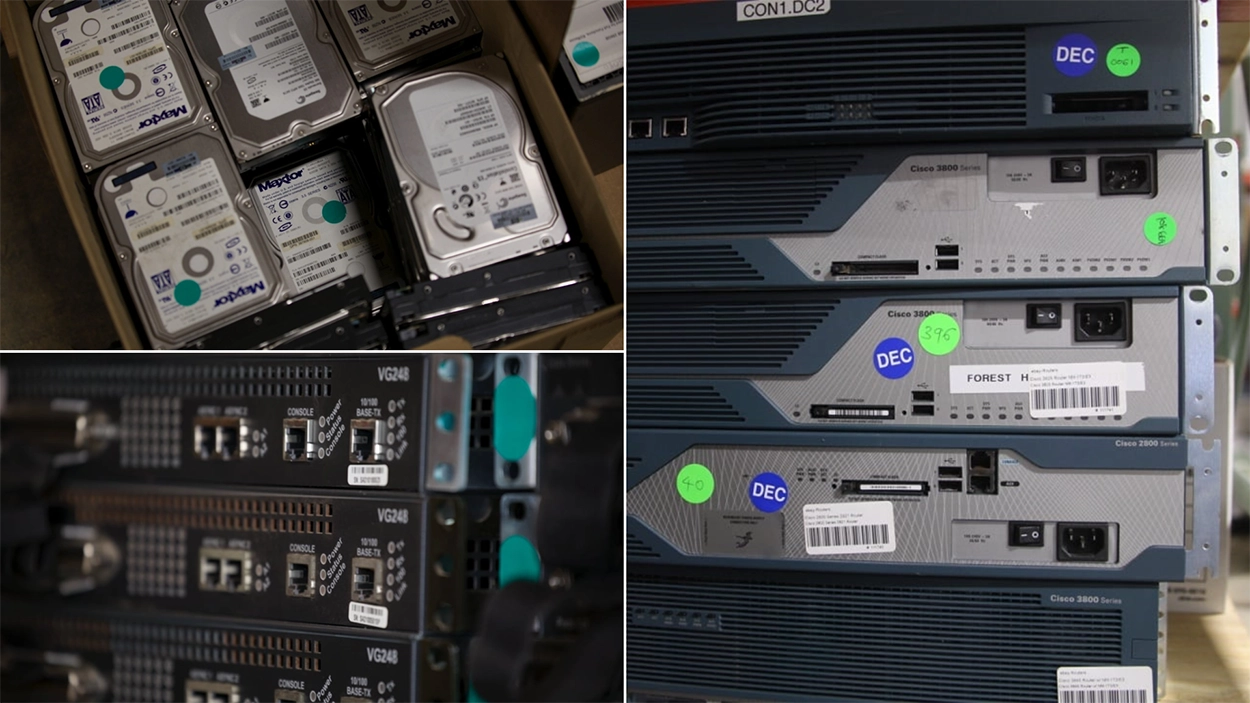
An accurate pre-quote requires the asset list with model, configuration, condition grade, and quantity. Vague quotes signal vague processes. The pre-quote stage is also the first vendor-quality signal: a vendor that quotes without asking for the documented asset list is quoting against worst-case assumptions, which means the price is worst-case.
The pre-quote should reflect three components: gross asset value (what the equipment realizes on the secondary market), pickup and logistics costs (which get deducted), and the settlement structure (lump sum, revenue share, or hybrid). Vendors that bundle these into a single opaque number have an incentive structure that does not align with the seller's interest.
Send the asset list to two or three ITAD vendors for pre-quote comparison. Wide variation in pre-quote numbers signals one of two issues: vendors are quoting against different condition assumptions, or vendors are pricing in different risk margins. The audit-grade vendor's pre-quote is more conservative on configuration assumptions and more transparent on cost structure.
Step 3: ITAD Vendor Selection and Contract
An audit-grade ITAD vendor holds NAID AAA Certified, R2v3 Certified, and RIOS Certified. Single-cert vendors have gaps that surface under audit. Each certification verifies a different operational dimension. i-SIGMA's NAID AAA program verifies the data destruction chain-of-custody and the per-asset destruction process. SERI's R2v3 standard verifies a vendor's process requirements across recycling, data sanitization, and equipment refurbishment. ITAMG is certified to R2v3 Appendix A (downstream recycling chain), Appendix B (data sanitization), and Appendix C (test and repair), which is broader than recycling and downstream traceability alone. The RIOS standard verifies the integrated management system that ties quality, environmental, and occupational safety into a single audited program.
Beyond the certification stack, vendor due diligence should verify: client references in the seller's industry, contractual cap on liability that matches the seller's exposure, downstream traceability documentation (which downstream partners receive non-resaleable material and under which certifications), and a clear position on the wipe decision in Step 4.
The contract should specify the settlement structure, the audit packet deliverables, the timeline commitment, and the discrepancy-handling protocol from Step 6. Contracts that leave any of these implicit are contracts that produce disputes at close-out.
Step 4: The Pre-Pickup Data Sanitization Decision
The pre-pickup data-sanitization decision is a risk-allocation decision. Wiping data before pickup keeps operational responsibility with the seller's team. Wiping at a NAID AAA Certified ITAD vendor's facility assigns documented operational responsibility to the vendor under the contract and chain-of-custody record. Each path is defensible. The choice should be deliberate.
The seller-side wipe path makes sense when the IT team has standardized wipe tooling (per NIST SP 800-88 Rev. 1) and the capacity to produce per-asset verification logs at the scale of the disposition. An audit-grade ITAD vendor performs certified erasure on every drive regardless of any seller-side wipe; ITAMG's automated workflow makes it impossible for media to move through inventory without a documented destruction process completed per the contractual agreement, which closes the data-exposure gap on both sides.
The vendor-side wipe path makes sense when scale, asset diversity, or regulatory exposure makes per-asset chain-of-custody documentation a higher-value proxy for compliance. Most regulated industries (healthcare under HIPAA, financial under GLBA and SOX, federal contractors under DFARS) prefer the NAID AAA Certified vendor path because the per-item serialized destruction record produced at Step 7, together with the project-level Certificate of Recycling and any Blancco erasure reports, gives auditors a chain-of-evidence to review.
Step 5: Pickup and Chain-of-Custody Handoff
Pickup transfers chain-of-custody from the seller to the NAID AAA Certified ITAD vendor under signed transfer documentation. The vendor's team arrives on-site, packages the equipment, scans asset tags against the inventory, signs the transfer paperwork, and seals the transport. Chain-of-custody documentation accumulates from this moment forward.
The on-site collection work for a standard enterprise ITAD pickup typically completes in a few hours. Large data center decommissioning or multi-site coordination extends that window to a full service day or more. The seller's team should witness asset-tag scanning at pickup. Where on-site witnessed destruction is contracted (the Step 7 alternative), the destruction equipment arrives on the same pickup.
Packing is the failure mode that commonly compromises Step 6 value. Servers, networking equipment, and storage arrays need anti-static handling, proper bracing for vibration, and clear handling notes for any equipment that was operating at the time of pickup (functional verification happens at the vendor's facility during the audit pass, not at the client site during pickup).
The transfer paperwork at pickup is the first document in the audit packet. It records the handoff parties, asset count and condition, and chain-of-custody routing through the vendor's facility.
Step 6: Receipt and Condition Verification at the ITAD Facility
Receipt verification reconciles the actual delivered inventory against the pre-quote. The vendor scans every asset tag at receipt, verifies configurations against the pre-quote list, grades each asset's condition (commonly an A/B/C grading scheme), and reconciles the count. At collection the vendor assumes rights and title to the devices, so disposition continues on schedule; reconciliation of variances happens through the audit report rather than by quarantining the equipment.
Common variance categories the receipt audit surfaces: missing accessories (memory modules, drive caddies, network cards) that change valuation; assets present at receipt that were not on the inventory; and assets known damaged at the seller's location but not disclosed at quote time, which the receipt audit catches the way Step 1 documentation should have caught them. The contract from Step 3 should specify how each category is handled and how any pricing adjustment flows back to the seller.
The audit-grade vendor produces a receipt report that is signed and shared with the seller. The seller's IT asset management team reconciles the receipt against the pickup transfer paperwork. Where variances materially affect the pre-quote, the pre-quote becomes a quote (with adjustments documented) before the disposition routing decision in Step 8.
Step 7: Certified Data Destruction Before Resale (NIST 800-88)
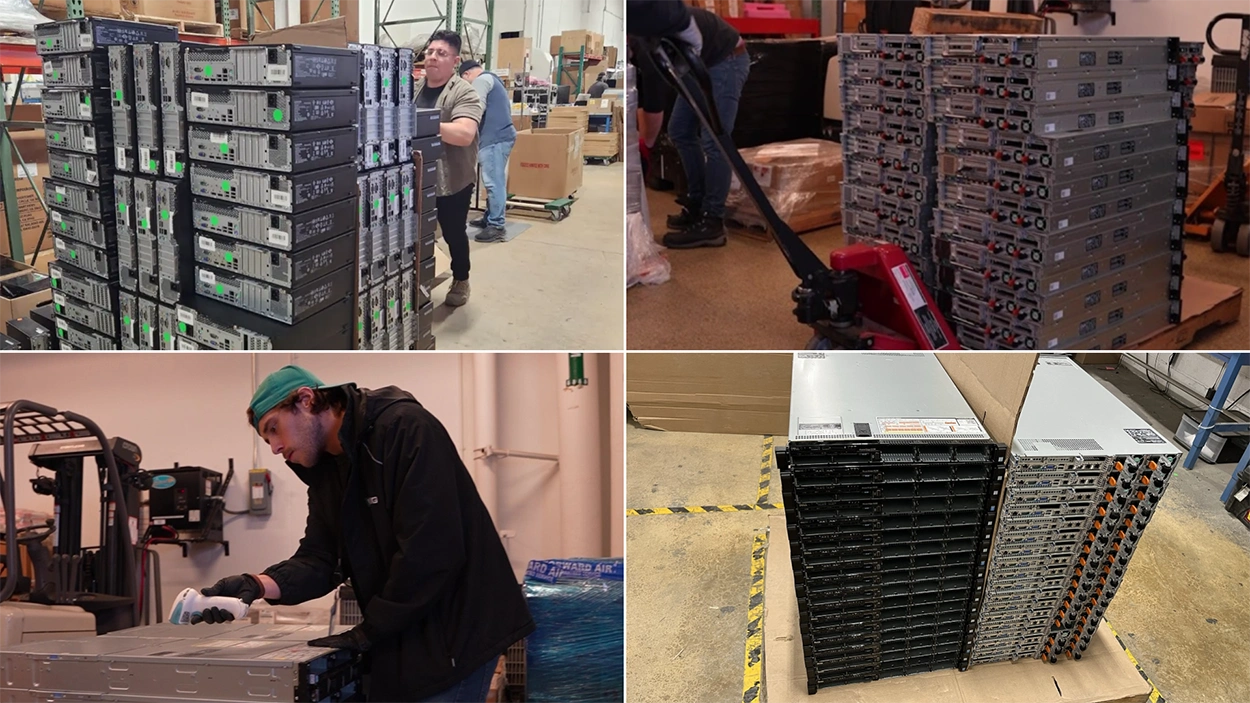
Certified data destruction follows NIST SP 800-88 method selection by asset class and produces a per-asset serialized certificate. The standard defines three methods: Clear (logical sanitization for read/write operations), Purge (cryptographic erasure or degaussing that defeats laboratory-grade recovery), and Destroy (physical destruction that renders the storage media non-functional).
Method selection is driven by the asset class and the seller's regulatory exposure. When an asset leaves the organization's control (sale, recycling, donation, lease return), Purge is the recommended NIST 800-88 sanitization level for magnetic hard drives: Clear is acceptable only for in-place reuse within the same security boundary, and Destroy is required for high-confidentiality data with no reuse plan. For solid-state drives, NIST method selection depends on data class, reuse plan, and media state (Clear-grade overwrites do not address wear-leveling reserves on SSDs). When the data class involves government classified information, the NSA/CSS Storage Device Sanitization Manual and the NSA Evaluated Products List apply on top of NIST, layering further destruction and verification requirements specific to government classified data.
Audit-grade vendors layer three documentation artifacts at destruction: a serialized asset report covering every item processed (per-item serial number, destruction method, status, technician, disposition status), a blanket Certificate of Recycling (COR) at the project level, and individualized Blancco erasure reports when drives are wiped rather than physically destroyed. Bulk certificates alone ("100 drives destroyed on this date") are weaker audit evidence because they do not tie a specific serialized asset to a destruction event. Regulated sellers under HIPAA, SOX, GLBA, GDPR, or PCI-DSS commonly require the per-item serialized layer for audit defense. ITAMG's hard drive shredding and data destruction services deliver all three artifacts (the per-item serialized asset report, the project-level Certificate of Recycling, and individualized Blancco erasure reports for any wiped drives) aligned with NIST SP 800-88 method selection.
Step 8: Disposition Routing (Resale, Refurbishment, Recycling)
Each asset is routed by highest-and-best-use after data destruction is verified. Resale where the secondary market offers a meaningful recovery value. Refurbishment where useful life can extend through component replacement or firmware refresh. Component recovery from non-resaleable units where memory, drives, or PCBA assemblies have aftermarket value. Responsible recycling under R2v3 downstream tracking for material that cannot deliver value through any reuse pathway.
The R2v3 downstream tracking dimension is what separates audit-grade recycling from commodity scrap brokering. R2v3 requires the vendor to document every downstream partner that receives non-resaleable material, the certifications those downstream partners hold, and the final disposition pathway for hazardous components. ITAMG works with R2v3 Certified downstream partners only, which closes the documentation chain through to final disposition.
Routing decisions are recorded per-asset. The seller's audit packet includes the disposition record for every serialized asset that came through Step 6. This is what allows the seller's compliance team to demonstrate at audit that the disposition followed the regulatory framework for the data class involved (PHI, financial records, government-controlled unclassified information).
Step 9: Settlement for the IT Equipment Sale
Settlement reconciles realized recovery against the contracted structure. ITAMG's default settlement model is a flat rate per asset, set at quote against the seller's documented inventory from Step 1. When the seller cannot provide a documented inventory list ahead of pickup, ITAMG's fallback structure is a 70/30 seller-to-vendor revenue share on sale value, with pre-split deductions for shipping, channel listing fees (such as eBay listing fees), ITAMG-added warranty, and value-added services such as maintenance contracts.
Three settlement structures are common across the ITAD market:
| Structure | How it works | When it fits |
|---|---|---|
| Flat rate per asset (ITAMG default) | A fixed price per line item, set at quote against the documented inventory from Step 1 | Most enterprise dispositions where the inventory is documented in advance of pickup |
| Revenue share (ITAMG fallback) | A 70/30 seller-to-vendor split on sale value, with pre-split deductions for shipping, channel listing fees, ITAMG-added warranty, and value-added services | Projects where asset value cannot be priced at quote and is established at resale |
| Hybrid | Flat rate for a defined asset subset plus revenue share for the remainder | Mixed-condition inventory where some line items have known floor value and others have wide variance |
The audit-grade vendor produces a settlement document that breaks out gross recovery (or the flat-rate per-asset reconciliation), pickup and logistics costs, and the seller's share. The breakdown is reconcilable against the contracted structure from Step 3. Settlement disputes are almost always avoidable when the documents from Steps 2 through 8 are complete.
Step 10: Compliance Reporting After the IT Equipment Sale
Compliance reporting closes the audit trail with per-asset documentation mapped to the seller's regulatory framework. The audit packet consolidates every artifact accumulated through the prior nine steps: the original inventory and pre-quote, the signed contract, the sanitization plan, the chain-of-custody paperwork, the receipt report, the per-item serialized destruction record, the project-level Certificate of Recycling, the Blancco erasure reports for any wiped drives, the disposition record, and the settlement statement.
Framework-specific reporting maps the audit packet to the regulator's documentation expectations:
- HIPAA (healthcare, regulated under 45 CFR 164.310): serialized destruction records for PHI-bearing media and downstream traceability for component disposition.
- SOX (publicly-traded companies, regulated under Sarbanes-Oxley §404): inventory reconciliation, recovery accounting against asset depreciation, internal control documentation.
- GLBA (financial institutions, regulated under the Safeguards Rule): serialized destruction records for customer financial records and the vendor due-diligence file.
- PCI-DSS (payment card environments): serialized destruction records for cardholder-data-bearing media and the vendor's compliance attestation.
- GDPR (organizations with EU data subjects, regulated under Article 32): serialized destruction records for personal-data-bearing media and documentation of the security measures applied.
- ESG (sustainability reporting): R2v3 downstream tracking, recovery and reuse metrics, recycling pathway documentation.
The compliance report is the artifact the seller's auditor, compliance team, or regulator examines if the disposition is ever questioned. The audit-grade version is per-asset, mapped to the relevant framework, and traceable through every step from inventory to final disposition.
End-to-End Timeline for Selling Used IT Equipment
End-to-end timeline runs a few hours of on-site collection time for a standard project (extending to a full service day or more for larger projects), plus approximately 45 days of off-site processing for receipt verification, certified destruction, disposition routing, and settlement. Certificates of destruction issue within 1 to 2 business days for on-site destruction work. The timeline assumes a standard enterprise pickup; data center decommissioning at scale, multi-site coordination, or complex sanitization scenarios extend the window.
| Phase | Typical duration | Output |
|---|---|---|
| Steps 1 to 3 (inventory, pre-quote, vendor selection and contract) | 2 to 4 weeks | Signed disposition agreement |
| Step 4 (sanitization decision) | Concurrent with Step 3 | Sanitization plan locked into the contract |
| Step 5 (on-site collection and chain-of-custody handoff) | A few hours for a standard collection; a full service day or more for larger projects | Chain-of-custody paperwork |
| Steps 6 to 8 (receipt verification, certified destruction, disposition routing) | Approximately 45 days | Receipt report, per-item serialized asset report, project-level Certificate of Recycling, Blancco erasure reports (when drives are wiped), and disposition record |
| Step 9 (settlement) | Shortly after Step 8 completes | Settlement statement and recovery report |
| Step 10 (compliance reporting and audit packet) | Concurrent with settlement | Per-asset audit packet |
Sellers planning around the timeline should treat the 45-day off-site window as the long pole. The Steps 1 to 3 lead time is controllable by the seller (faster inventory documentation accelerates the entire downstream sequence). The Step 6 to Step 8 sequence is the audit-grade vendor's operational tempo and runs concurrently across multiple seller projects in the vendor's queue.
Common Mistakes When Selling Used IT Equipment
The common failure modes (bulk certificates, single-cert vendors, undocumented pickup, choosing on price alone) often remain unnoticed until audit or close-out review. Each of them maps to a specific step where the failure was introduced and a specific audit moment where the failure surfaces.
| Mistake | Step where it's introduced | Consequence at audit | The correct pattern |
|---|---|---|---|
| Accepting bulk certificates alone (no per-item record) | Step 7 (data destruction) | Auditor cannot trace specific PHI/CUI/cardholder data drives to a destruction event | Require the per-item serialized record layer alongside the project Certificate of Recycling, regardless of project size |
| Choosing a single-cert vendor | Step 3 (vendor selection) | Operational gap in whichever dimension the missing cert covers (destruction, recycling, or integrated management) | Verify NAID AAA Certified, R2v3 Certified, and RIOS Certified together |
| Undocumented pickup | Step 5 (chain-of-custody handoff) | Chain-of-custody breaks before the vendor's facility, creating a documentation gap | Witness the asset-tag scan at pickup and retain signed transfer paperwork |
| Selecting on price alone | Step 3 (vendor selection) | Lowest price typically reflects unpriced risk (bulk certificates, vague downstream, no integrated management) | Weight the certification stack and contract specificity over the headline price |
| Skipping the pre-pickup wipe decision | Step 4 (sanitization decision) | Risk allocation never gets made explicitly, surfacing as an unowned liability if a breach occurs | Document the decision in the contract before pickup |
| No settlement reconciliation | Step 9 (settlement) | Settlement does not match contracted structure, with no documented reconciliation path | Verify gross recovery, pickup costs, and seller share against the contract |
| Treating documentation as a final step | Throughout | Audit packet has to be assembled retroactively, which produces gaps | Build the audit packet step-by-step through the process |
The pattern across IT equipment liquidation steps is the same: documentation that should accumulate through the process gets deferred to the end, where the missing pieces are now hard to assemble.
This step-by-step guide for selling used IT equipment applies across enterprise refresh cycles, decommissioning, and how to sell used computer equipment at scale. For multi-site projects, ITAMG's data center decommissioning services handle multi-location execution. The ITAMG used IT equipment buyback program is the cluster hub. Organizations evaluating ITAMG can request a pre-quote against a documented asset list to start the 10-step process.
Frequently asked questions
Quick answers to the questions buyers, compliance teams, and IT leaders ask most often about this topic.