
Used IT Equipment Appraisal: How Vendors Determine Fair Market Value
Equipment appraisal for used IT assets is the process by which professional vendors determine fair market value. Fair market value is the price an informed willing buyer pays an informed willing seller in an arms-length transaction. For used IT equipment, fair market value depends on seven factors weighted differently per asset class: age, brand and model, configuration, condition, market demand, volume of comparable equipment, and documentation completeness. Professional appraisers apply three core valuation methods to set the number: sales comparison, cost approach, and income approach.
What fair market value means for used IT equipment
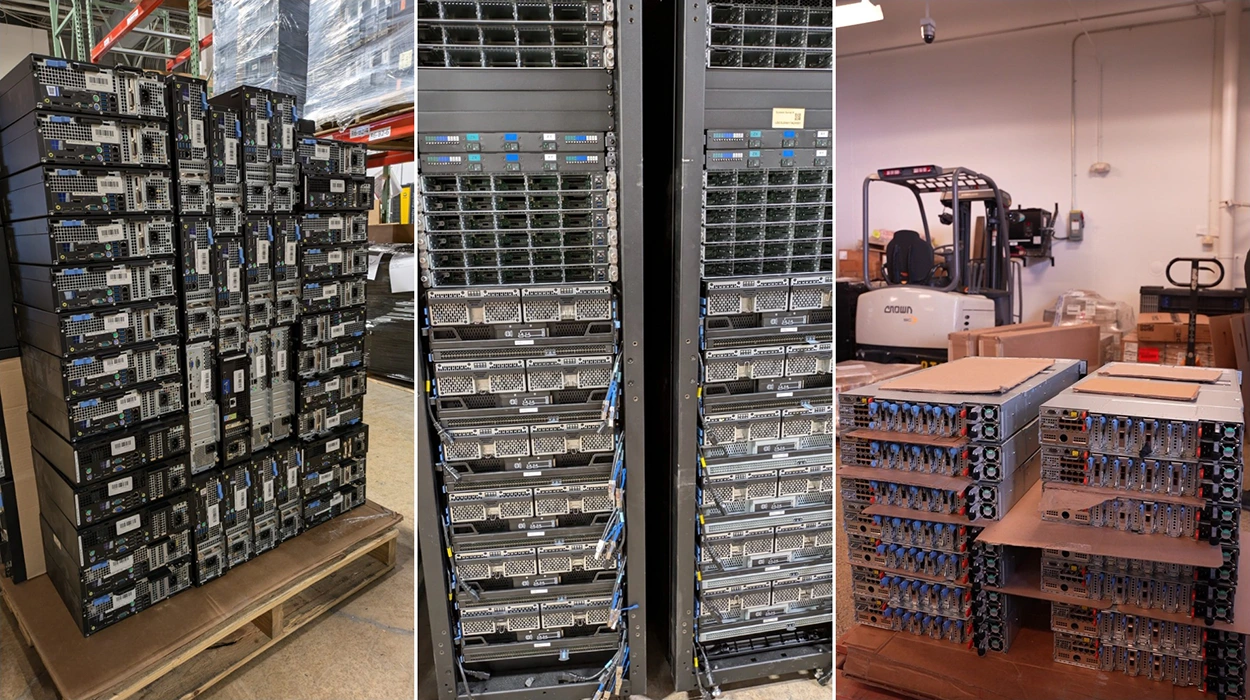
Fair market value for used IT equipment is the price an informed willing buyer pays an informed willing seller in an arms-length transaction. Both parties have reasonable knowledge of the relevant facts, and neither is under compulsion to buy or sell. This is the same baseline definition the IRS applies under Publication 561 for valuing disposed business property.
Equipment appraisal, also called asset appraisal or IT asset valuation, is the professional process of determining fair market value for a specific asset. For used IT equipment, that process accounts for the asset's age, condition, configuration, and current secondary-market demand. The output is a defensible number that supports tax reporting, balance-sheet recovery, M&A due diligence, donation valuation, and buyback negotiation.
Fair market value is distinct from other valuation concepts that sound similar. Book value reflects the asset's depreciated value on the balance sheet, which often diverges from what the market will pay. Salvage value reflects worth as raw materials. Replacement cost reflects buying the same thing new today. Liquidation value reflects a forced or accelerated sale, typically below FMV. Actual cash value blends replacement cost minus depreciation, which insurance carriers apply to claims.
| Concept | Definition | When it applies |
|---|---|---|
| Fair market value | Price between willing buyer and willing seller | Disposition, donation, tax reporting |
| Book value | Depreciated value on the balance sheet | Accounting and audits |
| Salvage value | Worth as raw materials | End-of-life recycling |
| Replacement cost | Cost to buy the same thing new | Insurance and capital planning |
| Liquidation value | Price under forced or accelerated sale | Bankruptcy, urgent disposal |
| Actual cash value | Replacement cost minus depreciation | Insurance claims |
The seven factors that drive fair market value
Fair market value for used IT equipment is determined by seven factors that weight differently by asset class. Documentation completeness is the most under-recognized of the seven; sellers with complete asset documentation receive higher offers because vendors do not price uncertainty as risk.
Age is the most visible factor. Computer equipment depreciation is typically front-loaded: used IT equipment loses resale value fastest in the first year, with continued decline through years three to five. Exact rates vary by asset class, configuration, and market demand. Specialty hardware including GPU compute and mainframes depreciates more slowly because secondary-market demand persists beyond standard refresh cycles. Sellers can model expected curves with a depreciation calculator before requesting quotes.
Brand and model anchor residual value. On the datacenter side, enterprise-grade brands such as Dell PowerEdge, HP ProLiant, Cisco UCS, Lenovo ThinkSystem, IBM Power, and Supermicro hold value better than consumer-grade hardware. The same factor applies to end-user devices, where enterprise laptop lines such as Dell Latitude, Lenovo ThinkPad, HP EliteBook, and Apple MacBook hold value more reliably than consumer-grade equivalents. The premium reflects buyer trust in the refurbishment pipeline and parts availability.
Configuration drives the largest fraction of the appraisal number for compute equipment. RAM, storage, CPU class, port density, and feature set move the offer up or down within the brand-and-model band.
Physical and functional condition drives refurbishment cost. Cosmetic grade and functional pass rate determine how much the vendor must invest to bring the asset to resale grade.
Market demand is the cyclical lens. GPU compute follows AI hardware cycles; server class follows enterprise refresh cycles; storage follows capacity-tier demand.
Volume of comparable equipment introduces a flood effect. Large quantities of identical units entering resale at the same time can soften per-unit pricing.
Documentation completeness is the seventh and most under-recognized factor. Asset tags, serial numbers, configuration records, and original purchase documentation move the offer from worst-case-scenario to documented-reality pricing.
| Factor | What vendors check | Why it matters |
|---|---|---|
| Age | Manufacturing year, service generation | Year-one decline is steepest; specialty hardware decays more slowly |
| Brand and model | Enterprise vs consumer-grade, model line | Enterprise brands retain residual value better |
| Configuration | RAM, storage, CPU, port density, feature set | Higher-spec configurations command proportional premiums |
| Condition | Cosmetic grade, functional pass, missing components | Affects refurbishment cost and resale market |
| Market demand | Current secondary-market cycle | GPU compute and server cycles run on different clocks |
| Volume | Quantity of identical units entering resale | Large parallel disposals can soften per-unit pricing |
| Documentation completeness | Asset tags, serials, configs, purchase records | Moves the offer from worst-case to documented reality |
Per-asset-class value drivers in IT equipment
Different IT asset classes weight the seven factors differently. The hierarchy of what matters first shifts by category, which is why a single FMV percentage does not exist for "used IT equipment" as a whole. ITAMG's used IT equipment buyback program covers all primary asset classes with per-class valuation methodology.
Used servers and storage equipment sit primarily on configuration. RAM, storage, and CPU class drive the largest fraction of the appraisal number, with brand line as the secondary lens and manufacturing age as the tertiary modifier. Specialty server configurations such as GPU compute and mainframes retain residual value far longer than commodity rackmount. ITAMG's full sell or recycle enterprise servers playbook walks the appraisal decision tree for the server category.
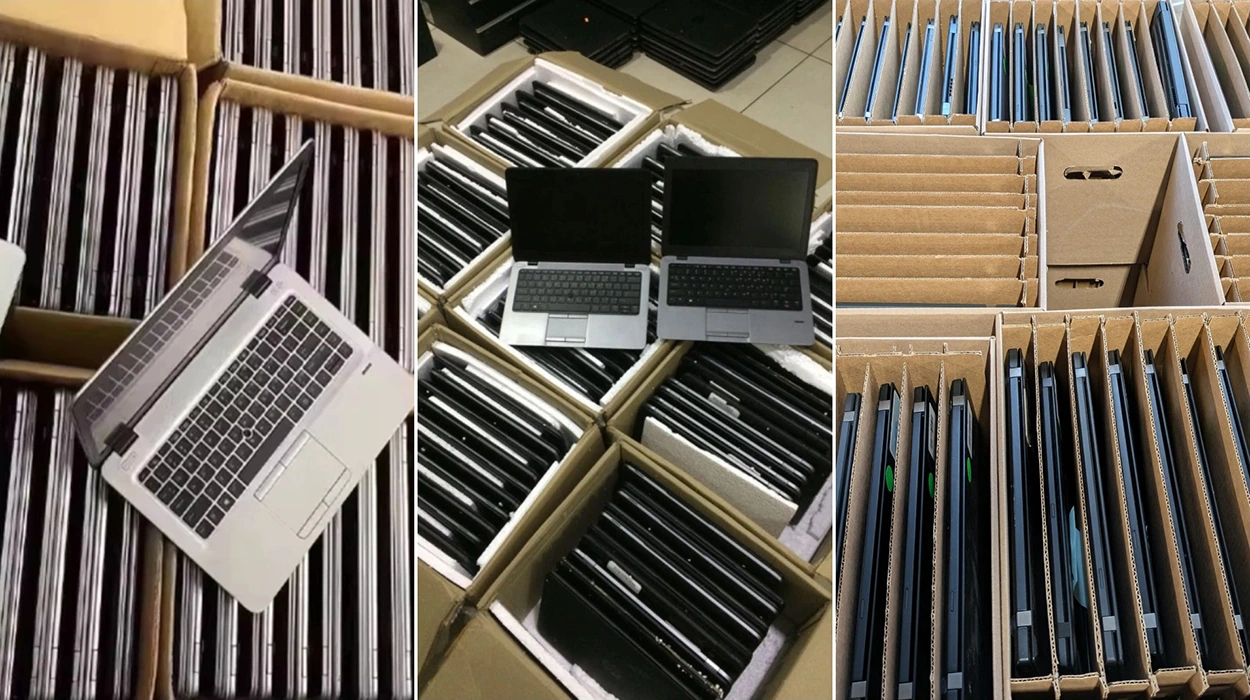
Corporate laptop disposal and liquidation sits primarily on brand and configuration. Enterprise lines such as Dell Latitude, Lenovo ThinkPad, and HP EliteBook hold residual value more reliably than consumer-grade laptops, with condition operating as a heavy modifier. Apple devices, particularly MacBook Pro and MacBook Air, also retain residual value strongly across the secondary market.
Used IT networking equipment sits primarily on feature set and port density. Cisco commands a premium for its installed base; Juniper and Arista follow; commodity gear trails. ITAMG's Cisco liquidation and disposal service covers switches, routers, firewalls, and access points across the active Cisco resale market. Software licensing transferability operates as a meaningful secondary modifier because non-transferable licensing reduces the practical resale pool.
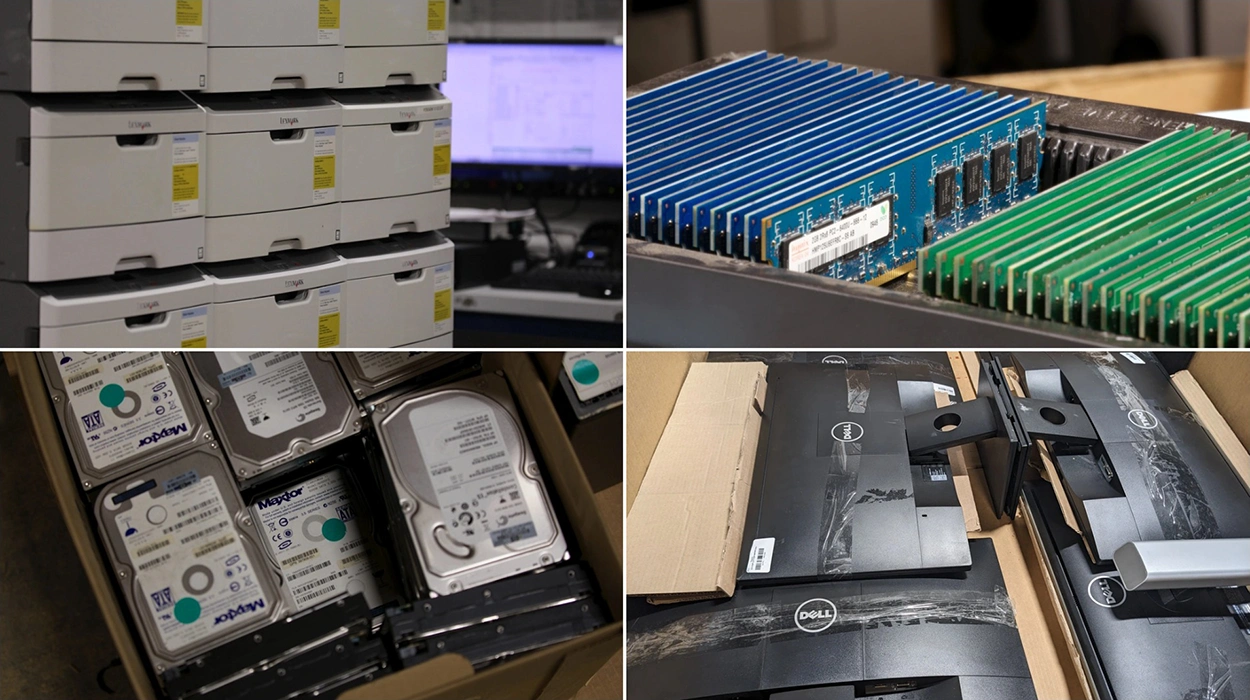
Storage tier drives the storage category. Enterprise SSDs from Pure, NetApp, and Dell EMC command premiums; commodity HDDs less so; tape libraries depend on capacity, age, and current cycle state. Components such as CPUs, GPUs, RAM modules, and drives appraise on brand and specification, with volume aggregation as a separate lever.
| Asset class | Primary driver | Secondary driver | Tertiary driver |
|---|---|---|---|
| Servers | Configuration (RAM, storage, CPU) | Brand line | Age |
| Laptops | Brand and configuration | Condition | Age |
| Networking | Feature set and port density | Brand | Software licensing transferability |
| Storage | Capacity and storage tier | Brand line | Age |
| Components | Brand and specification | Volume aggregation | Current-generation specialty status |
| Specialty (mainframes, AI compute) | Per-asset configuration | Market timing | Buyer pool |
Five valuation methods professional appraisers use
Professional equipment appraisers use three core asset valuation methods supplemented by two depreciation models. The right method depends on the appraisal purpose and the asset's market profile.
Sales comparison researches recent comparable sales across manufacturers, dealers, auction houses, and trade publications. The appraiser adjusts for age, condition, and remaining useful life. Sales comparison works best when an active resale market produces reliable comparables.
Cost approach starts with replacement cost new and depreciates based on age, condition, and functional obsolescence. Cost approach works best for unique or customized equipment without a deep resale history.
Income approach values the asset based on projected income from continued use. Income approach is rare for general IT equipment but applies to revenue-generating specialty hardware.
Straight-line depreciation spreads value loss evenly across the expected lifecycle. The model is useful for accounting and tax tracking but does not reflect real-world IT depreciation patterns.
Declining balance depreciation front-loads depreciation in the early years and tapers in later years. The curve reflects how IT equipment actually loses resale value and informs capital recovery models for disposed business assets, evaluated alongside a qualified tax advisor's guidance on applicable tax frameworks.
| Method | When to use | Strength | Weakness |
|---|---|---|---|
| Sales comparison | Active resale market with comparable transactions | Reflects real market behavior | Requires reliable comparable data |
| Cost approach | Unique or customized equipment | Anchors to current replacement cost | Depreciation model affects accuracy |
| Income approach | Revenue-generating specialty hardware | Captures earning potential | Rare for general IT equipment |
| Straight-line | Accounting and tax tracking | Simple curve, easy to forecast | Does not match tech depreciation reality |
| Declining balance | IT equipment appraisal | Front-loaded curve matches reality | More complex to compute |
The documentation premium in equipment appraisal
Documentation completeness moves the FMV offer from worst-case-scenario to documented-reality pricing. The mechanism is simple. Vendors price uncertainty as risk, so an undocumented fleet receives an offer that absorbs the cost of every unknown configuration, every potential missing component, and every chain-of-custody gap.
Asset tags and serial numbers from the seller's records give the buyback vendor a clear inventory view before pickup, which is the foundation for an accurate pre-quote. Configuration documentation enables instant pre-quoting; without it, the vendor either delays pricing or builds an uncertainty premium into the offer. Original purchase documentation supports configuration claims, and software licensing documentation (where transferable) preserves resale value that would otherwise evaporate.
The premium scales meaningfully at fleet size. A buyback that runs through a documented inventory feeds a tighter quote because the vendor no longer has to absorb the cost-of-uncertainty across every line item. The discipline maps cleanly to the IAITAM IT Asset Management Body of Knowledge standard, which treats documentation as a load-bearing input to every disposition decision. A vendor running a structured buyback program with documentation requirements typically returns offers that reflect the documented reality of what is being sold.
Market timing and resale cycles for used IT
Holding used IT equipment for market-timing speculation typically loses money. Storage costs (rack space, security, opportunity cost) plus continued depreciation usually exceed expected market upside.
Some asset classes do cycle. GPU compute follows AI hardware cycles. Server class follows enterprise refresh cycles. Storage follows capacity-tier demand. Industry events such as manufacturer end-of-life announcements and large fleet refreshes drive short-lived demand surges. Year-end CapEx clearing and post-budget Q1 demand produce predictable seasonal patterns.
The exception that justifies short-term holding is current-generation specialty hardware (AI and GPU compute) in active market cycles. For commodity rackmount, networking, and laptop fleets, disposition within weeks of refresh typically produces the highest net recovery.
Fair market value versus net recovery
Fair market value is the gross resale value or buyback offer. Net recovery is FMV minus project costs (vendor fees, internal labor, compliance documentation, freight) plus avoided costs (storage, security, liability exposure). The right CFO-grade metric for capital-recovery decisions is net recovery, not headline FMV.
The fair market value to net recovery formula: Net recovery = Gross FMV minus vendor fees minus internal labor minus freight minus compliance documentation costs plus avoided storage and security costs.
A net recovery model accounts for what actually lands on the balance sheet from disposition. A higher headline buyback offer can produce lower net recovery if the deal terms require more internal labor, longer staging, or weaker compliance documentation. Vendors that bundle end-to-end ITAD recovery services typically produce stronger net recovery even when headline offers look comparable.
| Line item | What it represents |
|---|---|
| Gross FMV (vendor buyback offer) | Vendor's offered price for the fleet |
| Vendor fees and margin | Embedded in the offer |
| Internal labor | Hours spent on logistics, decommissioning, prep |
| Freight and packaging | Shipping costs absorbed by the seller |
| Compliance documentation | Certificate of destruction, chain of custody, asset audit |
| Storage costs avoided | Months of rack space, security, opportunity cost freed |
| Net recovery | FMV minus internal costs plus avoided costs |
For donation valuation of disposed business equipment, fair market value follows the definition in IRS Publication 561. Capital-recovery and write-down treatment for disposed business equipment use separate tax frameworks; sellers should consult a qualified tax advisor for those classifications.
Common mistakes when valuing used IT equipment
Across more than two decades of ITAD engagements, ITAMG consistently observes the same valuation mistakes from sellers approaching disposition for the first time.
Ignoring market trends. Assuming last year's prices still apply throws off the valuation. Secondary-market pricing moves with cycles; quotes more than a few months old are reference points, not benchmarks.
Overvaluing obsolete equipment. Equipment that still powers on is not the same as equipment with active resale demand. Functional status is necessary but not sufficient for residual value.
Anchoring on original purchase price. What was paid years ago rarely aligns with today's FMV. Sunk-cost anchoring inflates expectations and slows the disposition decision.
Holding too long for a rebound. Storage and ongoing depreciation typically exceed expected upside. The hold-versus-sell math favors disposition for most asset classes.
Skipping condition checks. Overlooking cosmetic wear, missing components, or outdated specifications inflates self-estimates. Real condition grading produces real offers.
Misjudging bulk-pricing effects. Niche equipment does not always command broad demand, and volume does not always guarantee per-unit premiums. Some fleets monetize better in smaller, well-curated lots.
How sellers maximize fair market value
Sellers maximize fair market value by reducing the vendor's uncertainty premium and matching the disposition workflow to the asset class. Seven practical steps cover most fleets.
- Complete asset documentation before quote request. Asset tags, serial numbers, and configurations let the vendor pre-quote with confidence.
- Standardize configurations where possible. Vendors prefer standard configs because they fit cleanly into refurbishment and resale channels.
- Grade condition before shipping. Cosmetically damaged equipment shipped without grading produces post-receipt price adjustments.
- Request multi-vendor quotes for benchmarking. Spread reveals pricing reasonableness and surfaces hidden terms.
- Lock pricing model and scope of work in an MSA before pickup. Verbal terms produce post-pickup disputes; written scope produces clean settlements.
- Provide configurations at quote stage. Configurations let the vendor skip the uncertainty premium and quote the documented reality.
- Choose a vendor with R2v3 Certified, NAID AAA Certified, and RIOS Certified status. A certified ITAD vendor with all three demonstrates responsible processing and documented handling. Sellers who need per-asset valuation should require serialized valuation in the quote scope or master service agreement, separate from the vendor's certification status. Certified vendors also handle data sanitization to NIST SP 800-88 Rev. 2 standards before resale, which removes the disposition liability that otherwise discounts the offer.
For sellers ready to act, requesting a documented fair market value quote from a certified ITAD vendor produces the cleanest path from inventory to net recovery.
Frequently asked questions
Quick answers to the questions buyers, compliance teams, and IT leaders ask most often about this topic.